
Could Healthy-Looking Trees Be Struggling Beneath the Surface?
A tree can have green leaves and a full canopy while its roots quietly struggle with compacted soil. Tree service in Phoenix AZ can uncover these hidden constraints by examining root-zone conditions, drainage, soil density, irrigation, and signs of declining tree health. Luxe Tree and Landscape combines certified arborist knowledge with long-term Arizona experience to evaluate these issues before they develop into serious stability or growth problems.
Root-zone soil compaction occurs when soil particles become tightly compressed, leaving less pore space for air and water. Heavy equipment, construction, foot traffic, paving, poor drainage, and repeated landscape activity can gradually restrict root growth.
Root-zone soil compaction analysis helps arborists identify dense soil, poor aeration, restricted water movement, damaged roots, and drainage limitations. Correcting these constraints can improve root development, support tree health, and strengthen long-term stability before visible decline becomes severe.
How Can Compacted Soil Quietly Change a Tree’s Entire Growth Pattern?
Roots need oxygen, water, minerals, and physical space to expand. When soil becomes compressed, those resources become harder to access. Instead of spreading naturally through the surrounding soil, roots may encounter dense layers that restrict development. Over time, this can lead to smaller leaves, stunted growth, premature decline, canopy dieback, and reduced resistance to environmental stress.
That relationship is especially important for common Phoenix species such as mesquite trees, palo verde, Velvet mesquite, African sumac, Tipu trees, pine trees, and Stone pines. Even an established orange tree can respond poorly when its root environment changes. A tree service in Phoenix AZ assessment therefore shouldn’t focus only on branches. The root zone can explain problems that pruning alone won’t solve.
Can Tree Trimming Fix a Problem that Actually Starts Underground?
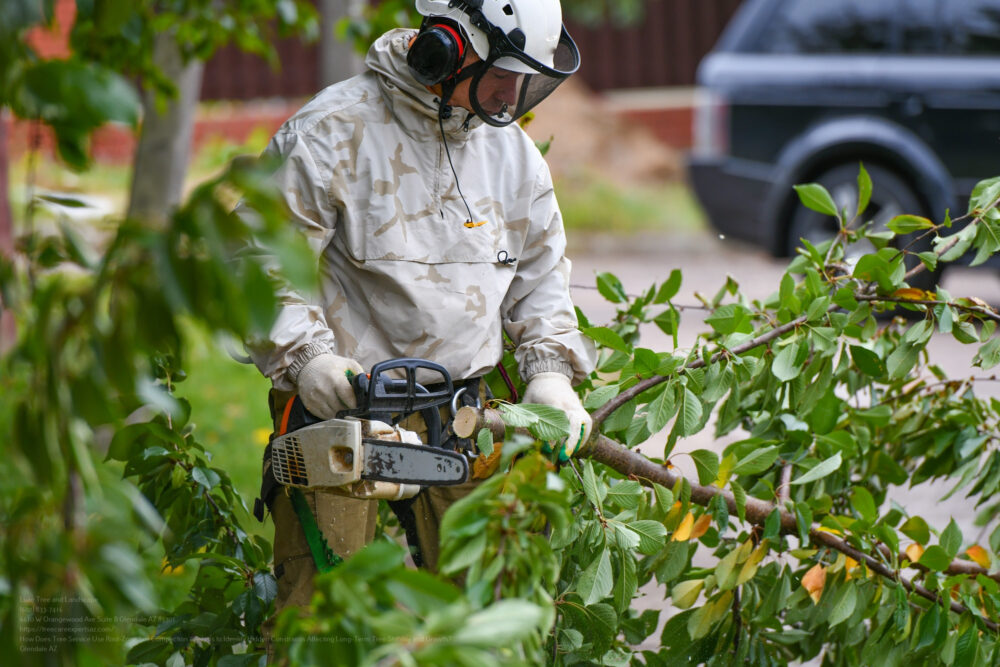
Not always. Tree trimming can reduce unnecessary canopy weight and remove dead or structurally weak growth, but it can’t restore severely restricted soil on its own. If compacted soil is preventing roots from receiving adequate oxygen or water, repeated pruning may only address the visible symptom.
This is why structural pruning, expert pruning, and routine tree maintenance work best when they are connected to a broader tree health assessment. Tree fertilizing may help where a documented nutrient deficiency exists, but fertilizer isn’t a substitute for correcting poor soil conditions. TreesAreGood also recommends soil testing and appropriate soil management when nutrient or growth limitations are suspected.
Luxe Tree and Landscape provides tree care, tree trimming, tree fertilization, tree removal, and commercial tree service, allowing property owners to address both immediate concerns and longer-term maintenance needs.
Need Professional Tree Service?
Contact Luxe Tree and Landscape for experienced arborist care and a tailored assessment.
5 Hidden Soil Constraints Arborists Look for Before Growth Slows
A root-zone assessment may reveal several problems that aren’t obvious from the surface. Compacted layers can restrict oxygen and water movement, while excessive fill soil can smother roots. Poor drainage can leave parts of the root zone saturated, whereas insufficient irrigation can create chronic drought stress. Construction can also sever roots or change grades around established trees.
Another clue is the relationship between canopy symptoms and site conditions. If one part of a crown repeatedly develops weak growth, an arborist may investigate whether the corresponding root area has been damaged or restricted. Cracks in the surrounding soil, unusual root exposure, surface heaving, and changes in tree lean can also warrant closer evaluation, as root failure can become a structural concern.
This is where professional tree care becomes more than an efficient service for trimming branches. It becomes a form of arbor care service that considers the complete growing environment.
What Happens When Root Balls and Planting Areas are too Restricted?
Root-zone problems can begin before a tree becomes mature. Poor planting practices, undersized root balls, circling roots, restricted planting pits, and compacted backfill can limit establishment from the beginning. The result may be a tree that survives but never develops the root structure needed for strong long-term growth.
The same principle matters when selecting locations for new trees. ISA guidance notes that soil conditions, drainage, available space, utilities, and human activity should be considered when choosing and placing trees. For trees planted near utility lines or paved areas, proper planning can prevent future conflicts between expanding roots and infrastructure.
How Does Tree Service in Phoenix AZ Connect Soil Health With Storm Safety?
A weakened root system can become a stability concern when weather conditions change. During monsoon winds, a tree with restricted or damaged roots may have less capacity to resist movement, particularly if the canopy is large or the soil around the root plate has been disturbed.
That doesn’t mean every compacted tree is automatically hazardous. Instead, the condition becomes one part of a broader risk assessment. Arborists may examine canopy defects, trunk condition, soil movement, root exposure, lean, and surrounding targets before deciding whether tree maintenance, pruning, emergency pruning, or full tree removal is appropriate.
For storm-affected trees, emergency tree services can also become necessary when branches or trunks fail. Luxe Tree and Landscape provides emergency services for storm damage and urgent situations, including commercial properties.
Which Trees and Landscapes Need Closer Attention?
Mature mesquite trees, palo verde, pine trees, palm trees, and ornamental species can all experience root-zone limitations, although their responses vary by species and site. A saguaro cactus may have completely different growing requirements from those of a large shade tree, so a qualified assessment should consider the plant rather than applying a generic treatment.
Commercial areas deserve particular attention because repeated vehicle movement, construction, landscape renovation, and pedestrian traffic can compact soil. Property managers should also watch areas near utility lines, paved surfaces, parking spaces, and newly renovated sections of a property.
Labor shortages and other operational pressures can tempt commercial clients to postpone preventive tree maintenance. However, delayed care can allow small soil, pest, or structural concerns to become larger problems. Luxe’s commercial programs are designed around recurring maintenance, health assessments, pruning, removal, stump grinding, and soil and health treatments.
What Can Property Owners Do After Compaction is Identified?
The appropriate response depends on the severity and cause of the compaction. Soil aeration, improved irrigation, drainage corrections, organic mulch, careful soil management, and changes to landscape traffic may help in suitable situations.
Other treatments may be considered when specific problems are found. Insect management can address pest pressure, while tree fertilizing can support documented nutrient needs. Bark beetle activity, disease symptoms, storm damage, or significant structural decline may require additional arborist evaluation. If a tree has become irreparably hazardous, tree removal may ultimately be the appropriate option.
Why Choosing Luxe Tree and Landscape is the Smart Decision
Long-term tree stability isn’t determined by the trunk and canopy alone. Root-zone soil compaction can restrict oxygen, water movement, root expansion, and nutrient availability, yet often goes unnoticed until tree health begins to decline. Professional assessment helps connect these underground constraints with visible symptoms and structural concerns.
Luxe Tree and Landscape brings more than three decades of Arizona experience, certified arborist expertise, licensed and insured service, and a family-owned approach to tree care throughout the Phoenix Metro Area. From tree trimming and fertilizing to commercial tree services, tree maintenance, emergency tree services, and tree removal, its services can address the broader conditions affecting landscape health and safety. For property owners looking for dependable tree service in Phoenix AZ, Luxe Tree and Landscape can evaluate the root zone and help determine the right path forward.
Need Professional Tree Service?
Contact Luxe Tree and Landscape for experienced arborist care and a tailored assessment.